
How Do I Start Email Marketing? A Complete Beginner’s Guide?
Email marketing is one of the most practical ways for a business, creator, freelancer, or startup to build a direct relationship with an audience. Unlike social media, where your content depends heavily on algorithms and platform changes, email gives you a more direct way to communicate with people who have chosen to hear from you.However, getting started can feel confusing. You may wonder which platform to use, how to collect subscribers, what kind of emails to send, and how often you should send them. The good news is that you do not need a large audience or advanced technical knowledge to begin. In this guide, we will explain how to start email marketing from the ground up, including choosing your audience, selecting a platform, building an email list, creating useful campaigns, measuring results, and avoiding common mistakes.
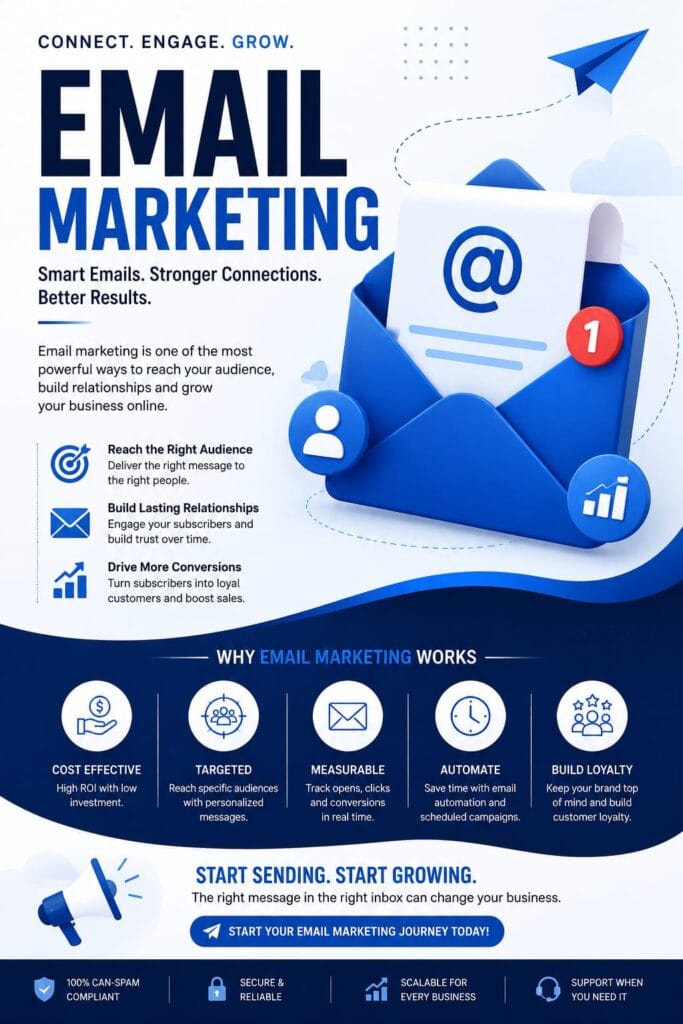
What Is Email Marketing?
Email marketing is the practice of communicating with customers or subscribers through email to provide information, build relationships, promote products or services, and encourage specific actions. A good email is not simply an advertisement. It should give the reader a reason to open it and something useful to take away from it. Businesses can use email marketing to welcome new subscribers, share educational content, announce products, provide special offers, or maintain relationships with existing customers. For example, an online clothing store might send new subscribers a welcome email, followed by styling tips, new-product announcements, and occasional promotional offers. A digital marketing freelancer might use email to share marketing advice and eventually introduce their services. The most successful approach focuses on value first and promotion second.
Why Should You Start Email Marketing?
There are several reasons email marketing remains valuable for businesses and creators. First, email allows direct communication. When someone subscribes to your list, you have a permission-based communication channel that does not depend entirely on social media algorithms. Second, email can help businesses build long-term relationships. Instead of trying to sell something immediately, you can regularly provide helpful information and become a trusted source. Third, email marketing can support different stages of the customer journey. You can welcome new subscribers, educate potential customers, follow up with existing customers, and encourage repeat purchases. Finally, email can be measured. Most professional email platforms provide information such as delivery rates, opens, clicks, unsubscribes, and other performance indicators. The important point is that email marketing should not be treated as a shortcut to instant sales. It works best as a long-term communication strategy.
Step 1: Define Your Goal
Before creating your first campaign, decide why you want to use email marketing. Your goal could be: – Generate leads – Increase website traffic – Sell products or services – Build a community – Educate an audience – Promote new content – Encourage repeat purchases – Develop relationships with potential customers Try to choose one primary goal initially. For example, if you run a small digital marketing business, your initial goal might be to build an audience interested in digital marketing tips. If you are an online store, your goal may be to turn subscribers into customers. Having a clear goal makes it easier to decide what subscribers should receive from you.
Step 2: Identify Your Target Audience
The next step is understanding who you want to communicate with. Ask yourself: Who would benefit most from my content, product, or service? You might target students, business owners, online shoppers, freelancers, content creators, or local customers. Knowing your audience helps you choose the right topics, language, offers, and communication style. For example, an email written for experienced business owners should not necessarily sound like an email written for someone who has never heard of digital marketing. The more clearly you understand your audience, the easier it becomes to create relevant content. This is one of the most important foundations of successful email marketing.
Step 3: Choose an Email Marketing Platform
You generally should not send large numbers of promotional emails manually from a personal email account. Instead, use a dedicated email marketing service. A professional platform can help you manage subscribers, create campaigns, design emails, automate messages, and monitor performance. When choosing a platform, consider: – Ease of use – Available automation features – Contact limits – Pricing – Templates – Analytics – Integration with your website – Signup-form options – Deliverability features Do not choose a platform simply because it has the most features. Beginners often benefit more from a simple system that they can use consistently. Before sending campaigns, also check the platform’s current policies and make sure your email practices follow applicable laws and anti-spam requirements.
Step 4: Build an Email List Properly
An email list is the foundation of your email marketing strategy. However, you should not purchase random email lists or add people without permission. A quality list is built from people who voluntarily subscribe. You can encourage subscriptions through: – Website signup forms – Blog content – Social media – Landing pages – Online events – Useful downloadable resources – Product purchases – Special educational content Give people a clear reason to subscribe. Instead of simply saying “Subscribe to our newsletter,” you could explain what they will receive, such as weekly marketing tips, helpful resources, product updates, or educational content. The key is transparency. People should understand what they are signing up for.
Step 5: Create a Valuable Lead Magnet
A lead magnet is something useful that you offer in exchange for an email subscription. For example, a digital marketing website might offer: – A beginner’s marketing checklist – A content planning template – A social media guide – A basic SEO checklist – A collection of useful marketing tools The lead magnet does not need to be complicated. Its job is to solve a small but meaningful problem for your target audience. If your lead magnet is genuinely useful, subscribers are more likely to see your future emails as valuable rather than unwanted promotions.
Step 6: Create a Welcome Email
After someone subscribes, do not leave them wondering what happens next. A welcome email introduces your brand and establishes expectations. A simple welcome email can include: 1. A thank-you message 2. A short introduction 3. What the subscriber can expect 4. A useful resource 5. A simple next step For example, if someone subscribes to a marketing newsletter, the welcome email could introduce the newsletter and provide a beginner-friendly marketing resource. Your first email is an opportunity to establish trust. Avoid making the entire message about selling something.
Step 7: Decide What Types of Emails You Will Send
There are many types of email marketing campaigns, and you do not need to use all of them. Newsletter Emails Newsletters can contain educational information, industry updates, tips, resources, or company news. Promotional Emails These emails are designed to promote a product, service, event, or special offer. Educational Emails Educational emails teach subscribers something useful. They are particularly effective for consultants, educators, agencies, and creators. Product Updates Businesses can use these emails to announce new products, features, improvements, or important updates. Automated Emails Automated messages are triggered by specific actions. For example, a new subscriber might automatically receive a welcome message. The best strategy usually combines useful content with relevant promotional messages rather than sending advertisements every time.
Step 8: Write Better Subject Lines
The subject line is one of the first things a subscriber sees. A good subject line should be clear, relevant, and honest. Avoid misleading claims designed only to get clicks. For example, instead of: “You Won’t Believe This!!!” you could write: “5 Simple Ways to Improve Your Email Campaigns” The second option tells the reader what the email is about. You can experiment with different subject-line approaches, but always prioritize clarity and relevance over exaggerated promises.
Step 9: Keep Your Emails Simple
A common beginner mistake is trying to make every email look like a complicated advertisement. In many cases, a simple email works better. Use: – Short paragraphs – Clear headings – Simple language – Relevant images – One primary call to action – Mobile-friendly formatting Before sending an email, read it as if you were the subscriber. Ask yourself whether the main message is obvious within a few seconds. If the reader has to work hard to understand what you are saying, simplify it.
Step 10: Add a Clear Call to Action
Every marketing email should have a purpose. Your call to action, often called a CTA, tells the reader what to do next. Examples include: – Read the full article – Download the guide – View the product – Register for the event – Book a consultation – Learn more Try not to overload one email with multiple competing actions. If the goal is to get people to read an article, make that the primary action. If the goal is to promote a product, make the product the main focus.
Step 11: Create a Consistent Sending Schedule
Consistency is more important than sending a large number of emails. You could begin with one useful email per week. Once you understand your audience and have enough content, you can adjust the frequency. There is no universal schedule that works for every business. The right frequency depends on: – Your industry – Audience expectations – Type of content – Business model – Subscriber preferences If you promise a weekly newsletter, try to maintain that schedule. Consistency helps subscribers know what to expect.
Step 12: Use Automation Carefully
Automation can make email marketing much more efficient. For example, you could create a simple welcome sequence: Email 1: Welcome and introduction Email 2: Helpful educational resource Email 3: Common problem and solution Email 4: Useful case study or example Email 5: Relevant product or service The sequence should feel natural rather than aggressive. Automation is especially useful because subscribers may join your list at different times. A well-designed sequence allows each person to receive important information in the appropriate order.
Step 13: Track Your Performance
You cannot improve your email marketing strategy if you do not measure its performance. Important metrics may include: Delivery rate: How many emails successfully reached recipients. Open rate: The percentage of delivered emails that were opened. Keep in mind that open-rate measurement can be affected by privacy features and technical factors, so it should not be treated as a perfect measure of engagement. Click-through rate: How many recipients clicked a link in your email. Conversion rate: How many people completed the desired action, such as purchasing a product or registering for an event. Unsubscribe rate: How many people opted out of your emails. Instead of focusing on one number, look at the overall pattern. For example, if many people open your emails but very few click, your subject line may be working while the content or CTA needs improvement.
Step 14: Test and Improve Your Campaigns
Good email marketing involves continuous improvement. You can test different elements, such as: – Subject lines – Email length – CTA wording – Content topics – Sending times – Layout – Images However, avoid changing everything at once. If you change multiple variables simultaneously, it becomes harder to understand what caused the result. Make one meaningful change, compare the results, and use what you learn in future campaigns.Common Email Marketing Mistakes to Avoid Beginners often make several avoidable mistakes.Common Email Marketing Mistakes to Avoid Beginners often make several avoidable mistakes. Buying Email Lists Purchased lists can contain people who never agreed to receive your messages. This can damage trust and may create compliance problems. Sending Too Many Emails Frequent unwanted messages can lead to unsubscribes and complaints. Making Every Email Promotional If every message asks people to buy something, subscribers may stop paying attention. Ignoring Mobile Users Many people read email on smartphones. Your emails should therefore be easy to read on smaller screens. Using Misleading Subject Lines A subject line should accurately represent the email’s content. Misleading subscribers can damage trust. Forgetting the Unsubscribe Option Legitimate email marketing should provide an appropriate way for recipients to stop receiving marketing messages and should follow applicable regulations. Writing for Everyone Trying to appeal to everyone often makes content less relevant. A clearly defined audience generally produces stronger communication. Email Marketing and Trust Trust is one of the most valuable assets you can build through email marketing. When people give you their email address, they are giving you permission to communicate with them. That permission should be respected. Be clear about what subscribers will receive. Send relevant content. Avoid deceptive tactics. Make it easy for people to unsubscribe if they no longer want your messages. A smaller list of genuinely interested subscribers can be more valuable than a huge list of people who never engage. The goal is not simply to collect as many email addresses as possible. The goal is to build an audience that actually wants to hear from you. A Simple Email Marketing Strategy for Beginners If you are completely new, you do not need a complicated system.
Start with this basic process?
Step 1: Define your target audience. Step 2: Choose one clear business or content goal. Step 3: Select an email marketing platform. Step 4: Create a signup form. Step 5: Offer a useful reason for people to subscribe. Step 6: Send a welcome email. Step 7: Create one useful email each week. Step 8: Include one clear CTA. Step 9: Track clicks, conversions, unsubscribes, and other relevant metrics. Step 10: Improve your strategy based on actual results. This approach is simple enough for beginners but provides a strong foundation for future growth.
Final Thoughts?
Starting email marketing does not require a huge audience, expensive software, or advanced technical skills. What you need most is a clear audience, a useful reason for people to subscribe, valuable content, consistency, and respect for your subscribers. Start small. Build your list organically. Create useful emails instead of sending constant advertisements. Track what happens after each campaign and gradually improve your strategy. The strongest email marketing programs are built around relationships rather than quick sales. When subscribers consistently receive relevant and useful information, they are more likely to trust the sender and remain engaged over time. If you are a beginner, focus on getting the fundamentals right first. Once you understand your audience and learn what content they respond to, you can gradually introduce automation, segmentation, testing, and more advanced strategies. In short, the best way to start email marketing is to start simple, provide genuine value, communicate consistently, measure your results, and keep improving. That foundation can help you turn a basic subscriber list into a meaningful long-term marketing channel.