
what is meta ads in digital marketing?
Digital advertising has changed how businesses reach customers.For businesses learning about Meta Ads, it’s helpful to understand that paid social media is just part of a broader marketing plan.Instead of relying only on newspapers, billboards, TV, or word-of-mouth, brands can now connect with very specific groups of people online.One of the most commonly used advertising systems for this is meta ads in digital marketing.
For businesses that depend on social media to find new customers, Meta Ads in digital marketing. can be a practical way to turn attention into measurable marketing activity.
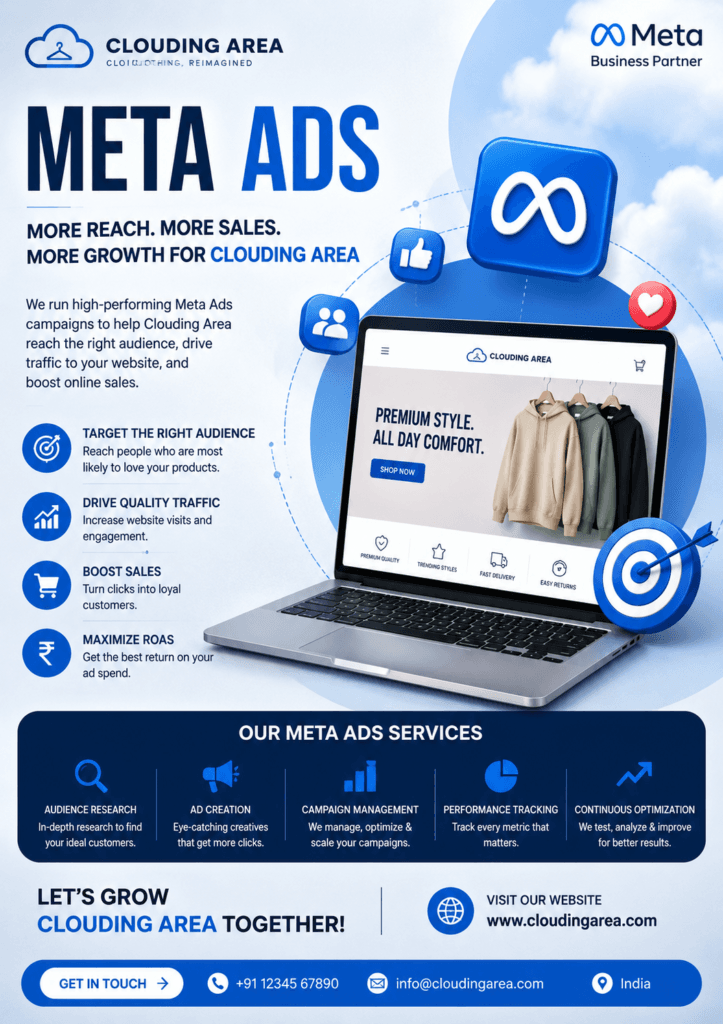
Meta Ads is the advertising platform from Meta
it’s designed to help businesses promote products, services, websites, apps, content, and special offers.
Whether you run a local business, an online store, a personal brand, or a growing company, understanding paid social advertising can help you make smarter decisions about your digital marketing.Learning about Meta Ads in digital marketing also helps marketers understand how to plan, test, and improve their paid social campaigns.
Meta Ads isn’t just about paying to show a post to more people.
A successful campaign includes choosing the right goal, knowing your audience, making useful and engaging content, setting a realistic budget, and checking results.This article explains what Meta Ads in digital marketing, how it works, its benefits, common campaign goals, costs, targeting options, and tips to get better results.
What Are Meta Ads?
Meta Ads in digital mrketing are paid advertisements that businesses create and manage through Meta’s advertising system.
These ads can appear on various platforms and areas owned or operated by Meta, especially Facebook and Instagram.Depending on how a campaign is set up, an ad might show up in feeds, Stories, Reels, search areas, or other eligible places.
The main advantage of Meta Ads is its ability to target specific audiences.
This targeting power is one of the reasons why Meta Ads in digital marketing remain popular among performance marketers.A business can define who it wants to reach using factors like location, age, interests, online behavior, and past interactions with the business.Meta also offers tools that help advertisers reach people who have already visited a website, engaged with social media content, or interacted with the business.
For example, think about a small company that sells running shoes.
Instead of showing the same ad to everyone, the company can create campaigns focused on people more likely to be interested in exercise, running, sportswear, or online shopping.This makes paid advertising more targeted than just posting a general social media update.
How Do Meta Ads Work?
The process behind Meta Ads in digital marketing might seem complicated at first, but once you understand the basic structure, managing Meta Ads becomes easier.
An advertiser tells Meta what they want to achieve, who they want to reach, how much they’re willing to spend, and what ad they want to show.
The platform then uses its system to decide when and where the ad should appear.
Meta takes into account the campaign’s goal, the target audience, the budget, expected action rates, and the quality and relevance of the ad.Advertisers compete for opportunities to reach users, so the cost per result can vary.
A typical Meta Ads campaign includes several key elements:
1. Campaign Objective – You choose the business result you want, such as awareness, traffic, engagement, leads, app promotion, or sales.
2. Audience – You define the people you want to reach.This may involve demographic data, location, interests, custom audiences, or similar audience strategies.
3. Creative – This is the actual ad, such as an image, video, carousel, or other format, along with its text and call to action.
4. Budget and Schedule – You decide how much you want to spend and when your campaign should run.
5. Placements – You can let the system choose suitable placements or control where the ads appear, depending on your campaign strategy.
6. Measurement – After launching, you check performance data and make changes based on what the numbers show.
Meta Ads structure is important because a campaign can fail even if one part is strong.
A great product won’t automatically lead to good results if the audience is poorly chosen or the ad doesn’t clearly communicate value.
Why Are Meta Ads Important in Digital Marketing?
Meta Ads in digital marketing is now an important part of digital marketing because it combines large social platforms with detailed advertising and measurement tools.
Organic social media posts can be helpful, but how far they reach is hard to predict.
Paid ads, like those on Meta ads in digital marketing, give companies more control over who they are trying to reach and what they want people to do.
Another good thing about Meta Ads is that they let businesses test different ideas.
A company can make several ads with different headlines, pictures, videos, promotions, or target groups.Then they can see which ones work best.By doing this over time, they can figure out which messages and styles are most effective.
Meta Ads can also help at different stages of how customers learn about a brand.
Someone who doesn’t know the brand might first see an ad that introduces it.A person who has already visited the website could get a reminder about a product.A past customer might see an ad about a new offering.This makes paid social ads useful for more than just promoting the brand.For instance, a business might use content to show off their brand, an educational ad to build interest, and a sales ad to push someone to buy.
The way they structure their ads depends on the product, the audience, their budget, and where customers are in their journey
If you want to learn more about marketing then you can visit our main Digital Marketing Page.